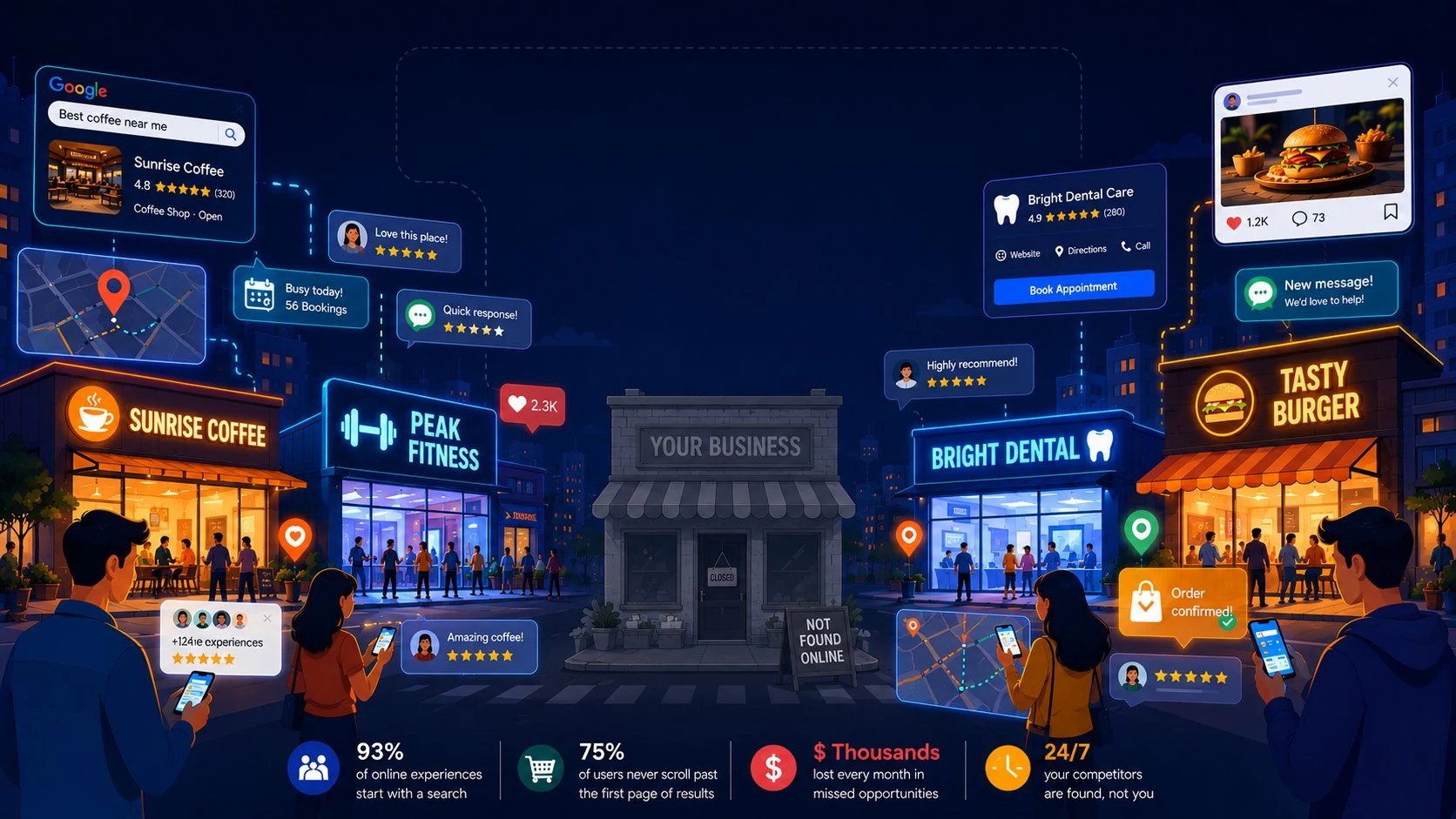
The Cost of Not Having a Website
The cost isn’t the website. It’s the customers you lose.
The Cost of not having a website.
The Cost of Not Having a Website
You don't have a website. Maybe you've been getting by on referrals, LinkedIn, or word of mouth. Maybe building one has been on the to-do list for two years and keeps slipping. Maybe you genuinely believe your business doesn't need one.
Here's the uncomfortable truth: not having a website isn't saving you money. It's costing you money every single day — you just can't see the invoice.
The Invisible Bill You're Already Paying
When a potential client hears your name, the first thing they do is search for you. Not call. Not email. Search.
If nothing comes up — or worse, a half-finished Google Business profile from 2019 — you've already lost the deal. They won't tell you. They won't email asking for more info. They'll quietly move on to the competitor whose website loaded in two seconds and answered their questions.
This is the cost no one talks about: the deals that never happen, the introductions that never get made, the inbound enquiries that go to someone else. You can't track what you can't see.
What You're Actually Losing
Credibility. In B2B, buyers research before they buy. A study by Demand Gen Report found that 67% of the buyer's journey is now done digitally before a prospect ever talks to sales. If you're not part of that 67%, you're not in the running.
Compounding traffic. A website is the only marketing asset you own that works while you sleep. Social media platforms own your audience. Referrals depend on someone remembering you. A website ranks, gets found, and brings in leads on autopilot — but only if it exists.
Negotiating power. When prospects can't verify who you are, what you do, and who you've worked with, they treat you as a commodity. They negotiate harder on price because they have no other signals of value. A website is your case for being worth more.
Talent. Good people research employers before they apply. No website means no story, no team page, no sense of where they'd be working. The candidates you'd want most are the ones least likely to take a chance on a black box.
The "We Don't Need One" Myth
I hear this a lot. "Our clients come from referrals." "We're booked out." "Our industry doesn't really do websites."
Let me reframe it. If you're booked out on referrals alone, imagine what happens when those referrals slow down — and they will. Markets shift. Champions change jobs. Referral sources retire. A website is the insurance policy that means you're never one bad quarter away from scrambling.
And "our industry doesn't do websites" usually means "our industry hasn't done websites yet." That's an opportunity, not an excuse. The first proper website in a sleepy sector wins disproportionate attention.
What a Website Actually Replaces
A good website does the work of three or four employees you don't have to hire:
- It qualifies leads before they reach your inbox.
- It answers the same questions you currently answer in calls and emails.
- It builds trust before the first conversation, so sales cycles shorten.
- It markets you to people you'd never meet otherwise.
The question isn't whether you can afford a website. It's whether you can afford to keep paying for not having one.
The Real Number
A decent B2B website costs less than one mid-tier hire. It works 24 hours a day, never takes holiday, and gets better the longer it's been online. If it brings in one new client a year, it's paid for itself many times over.
If you're still treating your website as a "someday" line item, here's a useful exercise: estimate the average value of one new client. Now ask yourself how many you'd need to win to justify the build. For most B2B businesses, the answer is one. Sometimes less.
The cost of having a website is a known number. The cost of not having one is invisible — which is exactly why it's so much higher than you think.
Ready to stop paying the invisible bill? Let's talk about what a website could do for your business.